Building The Tool, Then The Art
Some projects start with a drawing. This one started with a question we couldn’t answer yet: how do you paint a 40-foot sunset and actually pull it off at scale?
The brief was a single San Diego moment - that stretch of evening where the ocean meets the sun, blues folding into orange, green drifting into gold. Not a flat gradient, not a printed graphic. Something with weight and atmosphere, closer to the feeling of standing in front of it than a picture.
There was no playbook for a custom art installation like that… so naturally, we wrote one.
A Sunset, Built In Panels
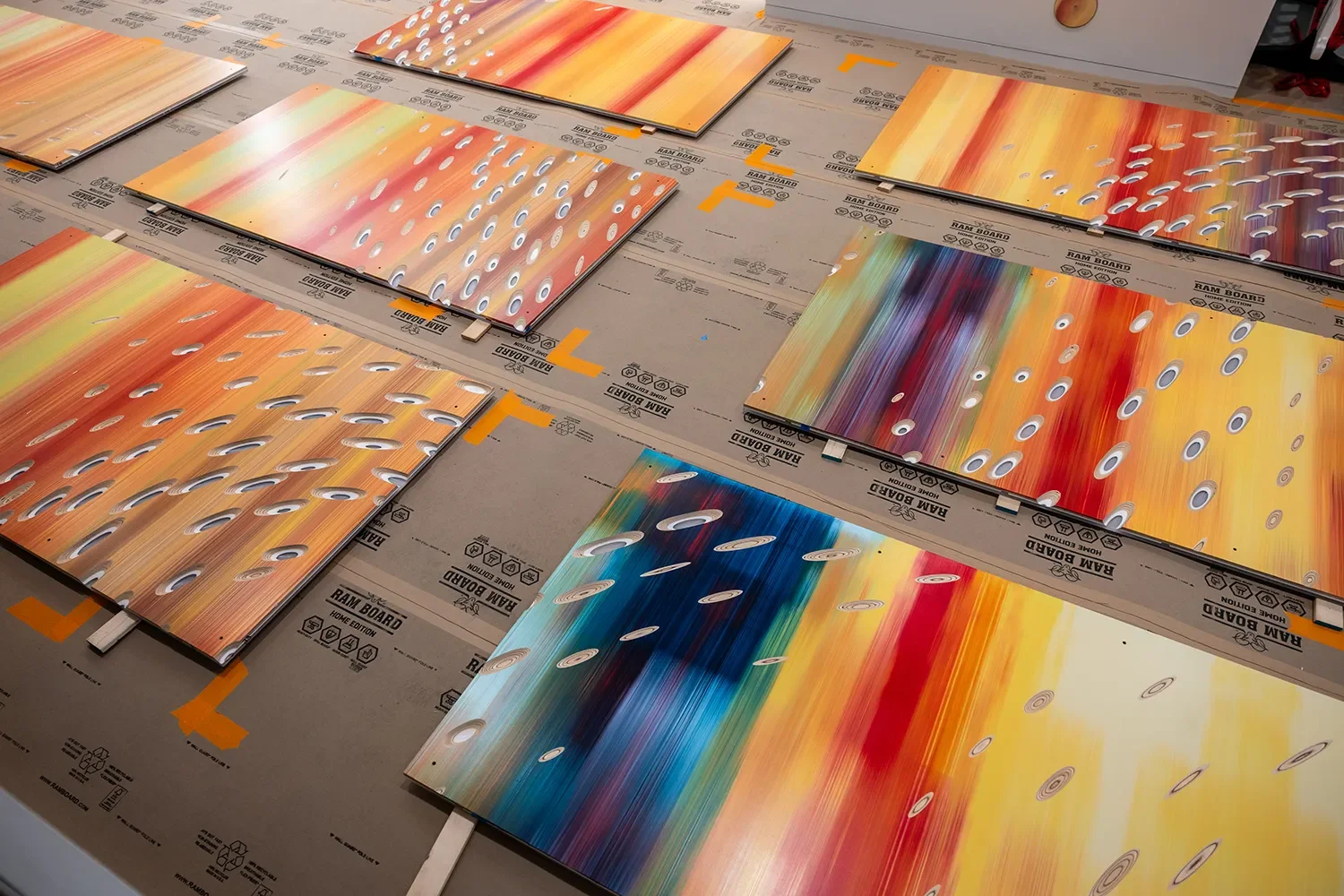
The finished feature stands 40 feet tall and about 27 feet wide, 35 stacked panels, amounting to around 950 square feet of surface.
Early on we considered printing the whole thing. Clean, fast, predictable, and flat. We’d lose the texture - all the small imperfections that make a piece feel alive. So we committed to painting every square foot of it by hand.
Turning Color Into A Language
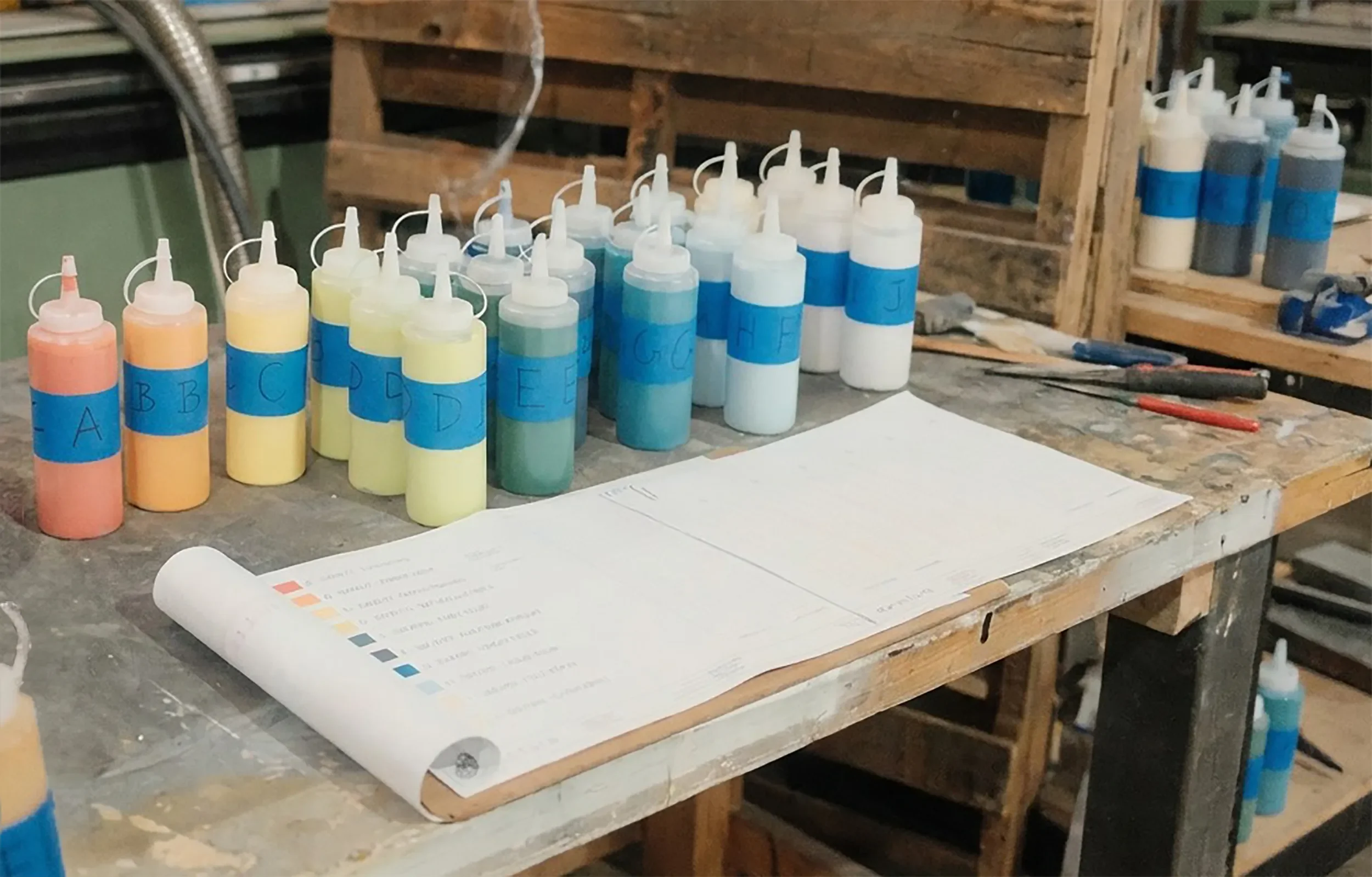
A sunset is pure gradient, which is a hard thing to hand off to a crew. So we broke it down - distilling the full range into 10 core hues and giving each one a letter.
From there we built a grid: part color map, part choreography. Every line marked an exact color and position, which gave the brush a path to follow without flattening the motion out of it.

Building The Painting Machine
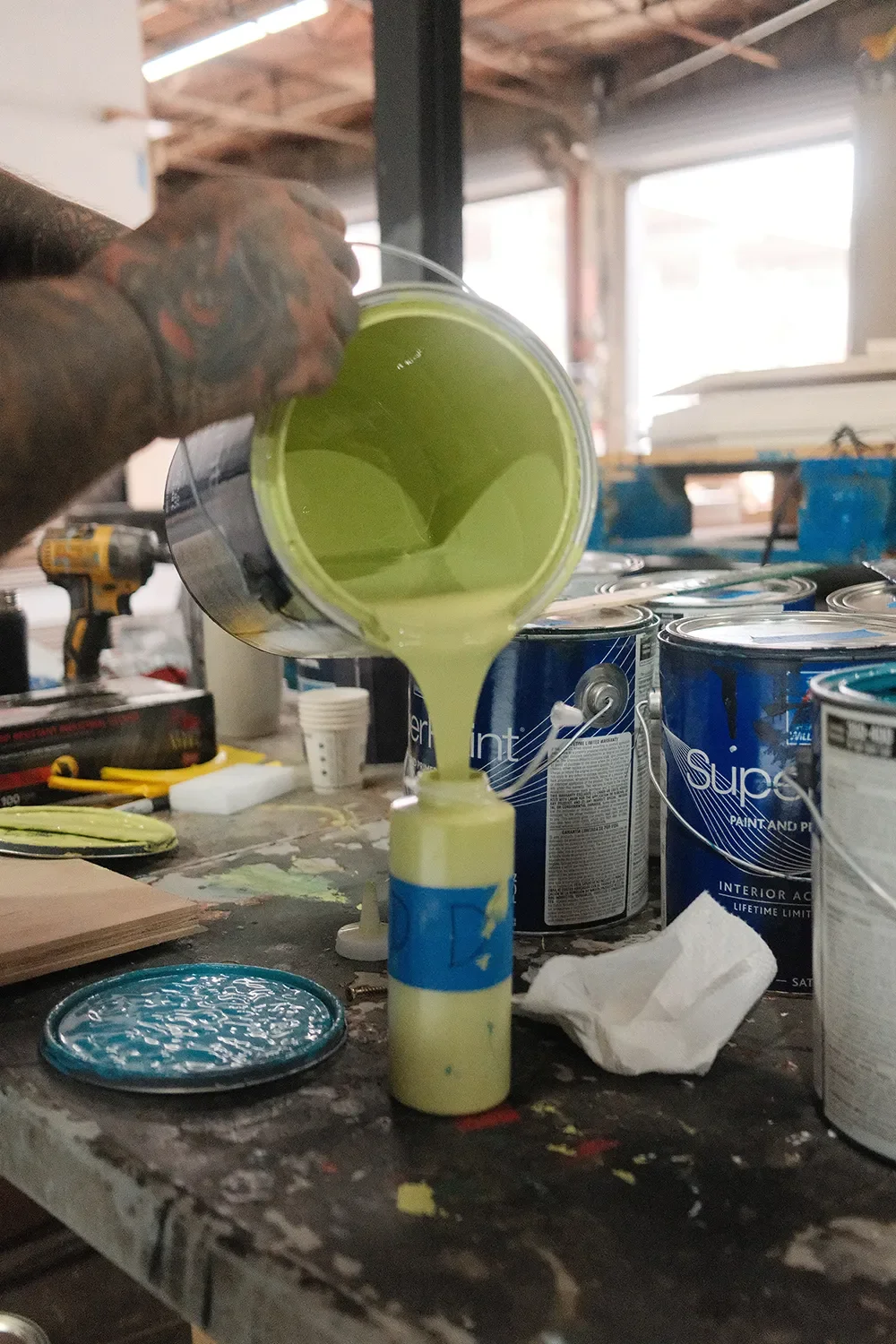
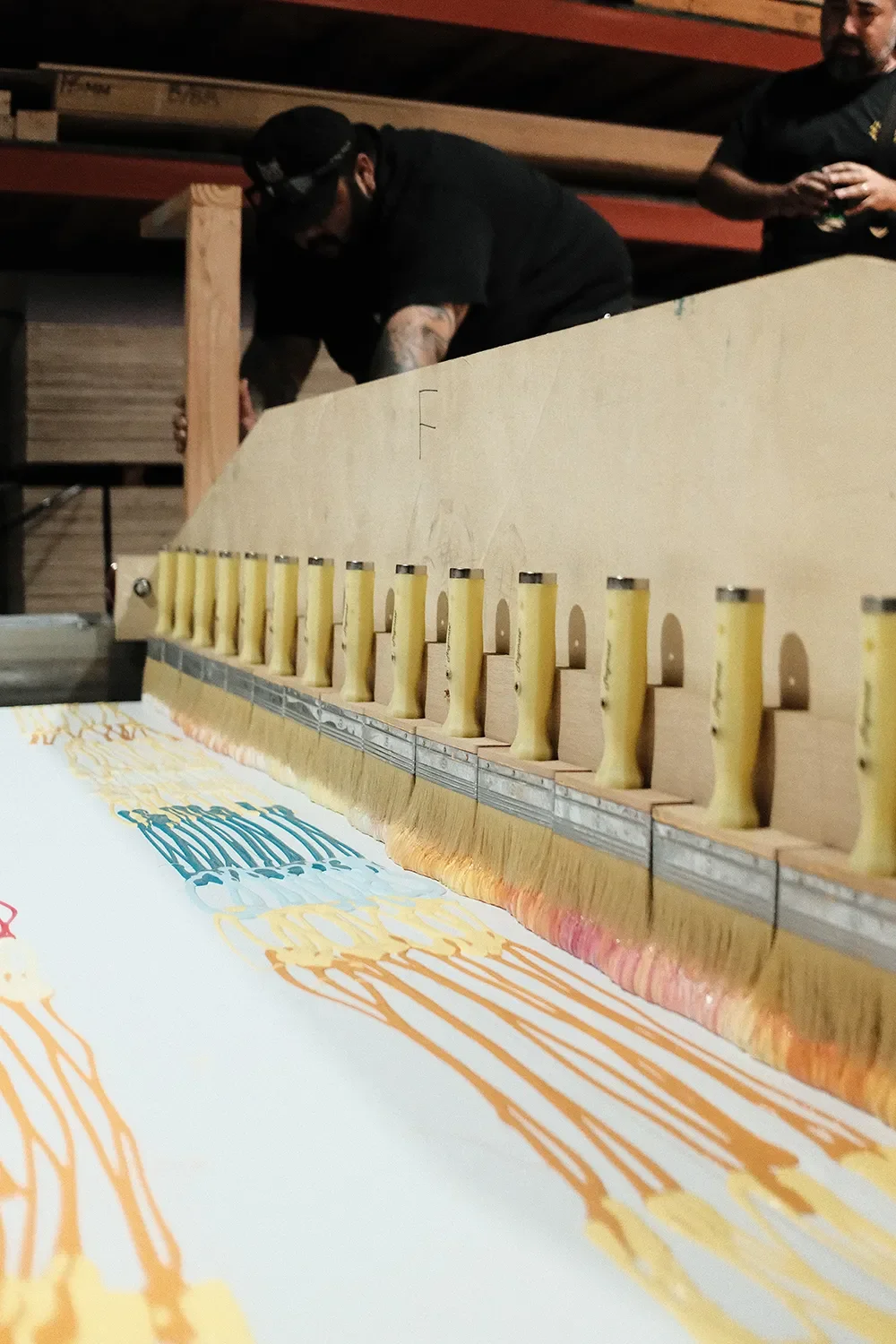
Translating a digital blend into real paint came down to pressure, rhythm, and timing. We tested on small boards first - stroke weight, paint viscosity, brush width, and spacing. After six prototypes we landed on a rig: a wooden sled carrying two rows of brushes. The first row laid the color down; the second softened the transition right behind it.
Then we scaled it up. We welded a custom aluminum track in-house and built a brush cart to ride it, wide enough to cross seven panels in a single steady pass. Part painting, part printing, part choreography.
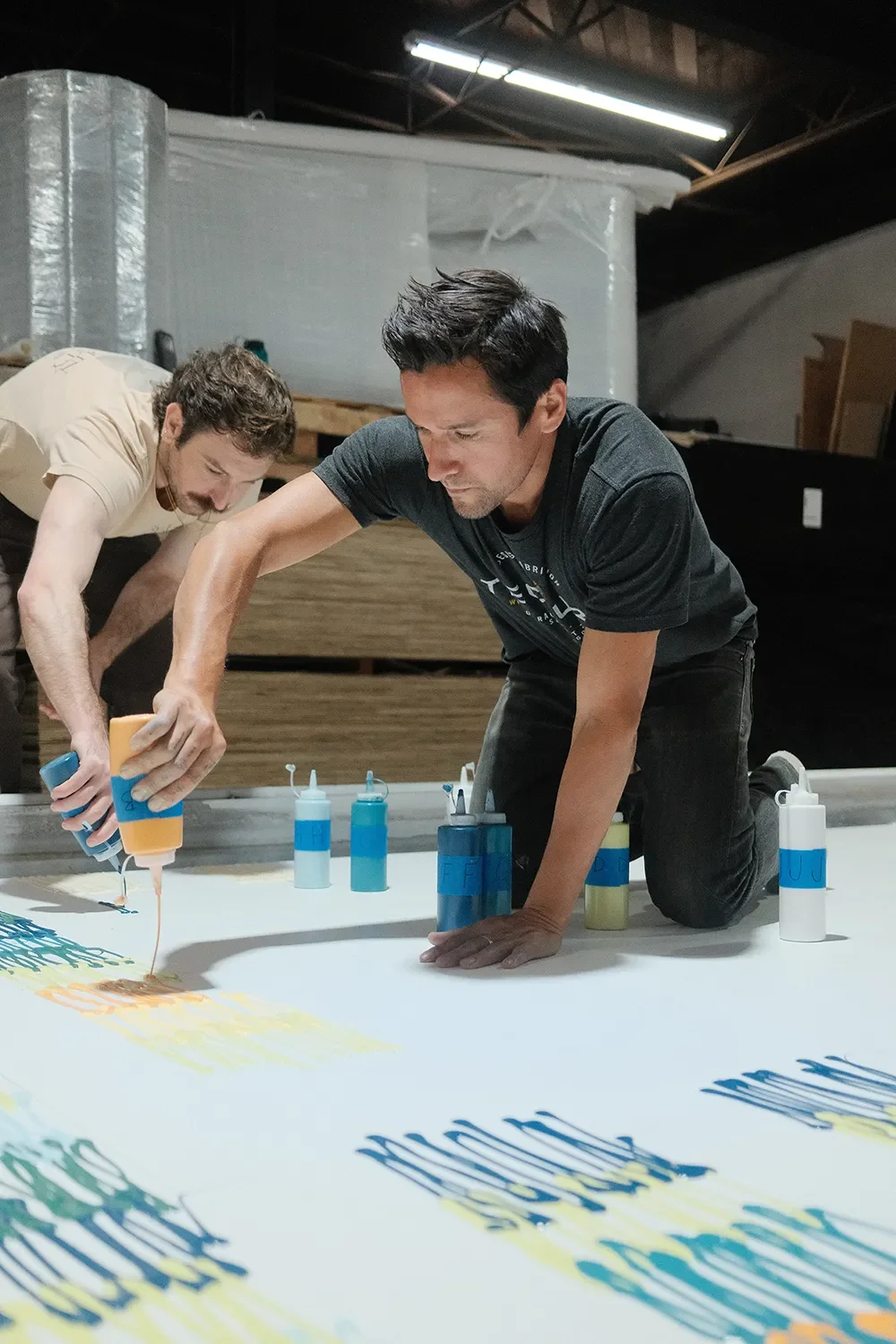
Every panel was etched with a numbered grid so our six-person crew could line up the colors exactly. Four people on the boards painting, two on the sides refilling paint bottles and guiding the cart. We only had one chance, no do-overs.
Carving The Layers Open
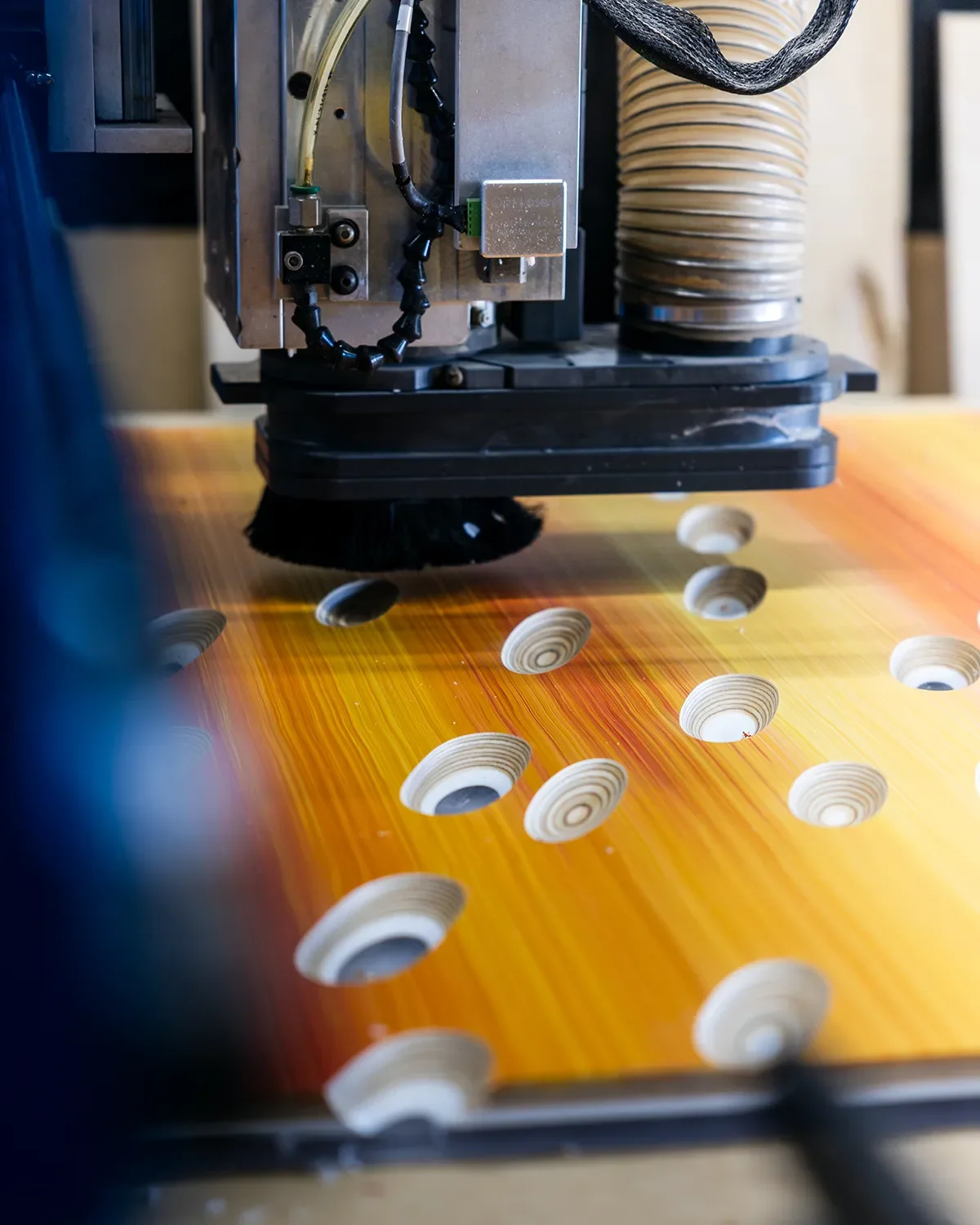
Once the panels were painted and dry, they went through our CNC machine. We cut scoops and curves into the surface to create a dimensional “swarm,” exposing the layers underneath - plywood, colored MDF, and frosted acrylic.
A full LED system with various programmed lighting sequences, that cycle throughout the day. The choreography of the lighting dances through the excavated scoops, and paired with the paint creating a unique story filled with color and movement. This is beyond a large piece of art on the wall, it feels alive.
Build The Tool, Make The Art
We didn’t start with a process. We built one - tools and all - because the piece asked for it. And that’s the part we’re proudest of: proving a method on a single 1×8 foot board, then betting it would hold across all 950 square feet in one pass, with no do-overs. That gap between the small test and the full scale is intimidating, but it’s also exactly where we thrive.
We’ll always take the tried-and-true projects too, but the ones that get our minds working on both a creative and strategic level - those are the ones we chase. This was definitely one of them. It was challenging, unlike anything we’d created before, and about as rewarding as it gets.
We’re beyond stoked with where it landed, and proud of it.
FAQs
-
Lobbies, hospitality spaces, retail environments, corporate interiors, restaurants - anywhere a space wants a defining moment instead of just a generic wall, or generic wall feature.
-
While we can recreate the system and process that we used, each piece we create is unique - especially for a piece like this where it was hand painted. What carries over is the approach, and translating it into something built specifically for you!
-
It all starts with a conversation! You’ll tell us what you’re looking for - what are your inspirations, what’s your vision, what’s the space like, and then we can take it from there. Whether you need us to develop design, or you come to us with one already, we will figure out all the details and make it happen. Let’s chat!
-
All the time! Sometimes a designer brings us the vision, sometimes they bring us a “how do we actually build this” problem they’re stuck on. Either works. We can jump in at concept or come in late to solve the hard part.
-
When texture is the point. Printing is fast, flat, and predictable - sometimes that’s the right call, and we’ll be the first to say so. But a print of the sunset would’ve read as a picture, and painting is what gave it weight.
Want more of Tecture’s fabrication insights?
Sign up for our newsletter to get regular updates sent directly to your inbox.